This past month has been filled with memories, many of them negative or painful: before Purim we read the Torah portion that instructs us to remember Amalek, the tribe that sought to destroy the Israelites and from which Haman descended; at Pesach we saw ourselves as having come out from slavery; at the end of Pesach we recited the Yizkor prayer in shul in memory of family members who have passed away; on Yom Hashoah we remembered those who perished in the Holocaust; and on Yom Hazikaron we memorialized Israel's fallen soldiers and the victims of terror attacks.
That is a lot to remember! Especially due to the nature of these particular memories, it can be an emotionally draining period. Does this period bring you down? Or give you resolve? Do you personally find benefits - or downsides - to all of this collective memory? How do all of these memories affect you? Your Jewish identity?

A Virtual Beit Midrash
Got an insight to share? Interested in stimulating ideas about Jewish topics? Feeling the urge to do some Torah study in all those days between Hebrew School? Then this is the blog for you.
The goal of this blog is to bring the lively debates and discussions from our class sessions outside the confines of the classroom. With such a wide range of ideas, there is so much to say and never enough time to say it. This blog will enable the conversations to keep going even after the bell has rung.
The goal of this blog is to bring the lively debates and discussions from our class sessions outside the confines of the classroom. With such a wide range of ideas, there is so much to say and never enough time to say it. This blog will enable the conversations to keep going even after the bell has rung.
How to Add Comments
1 - Click "comments" at end of post
2 - Type your comment in box
3 - Click "Name/URL" , type your name
4 - Click "Publish." You're done!
2 - Type your comment in box
3 - Click "Name/URL" , type your name
4 - Click "Publish." You're done!
Successful Tzedakah Project
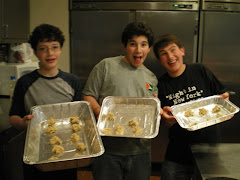
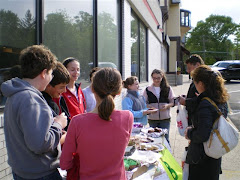
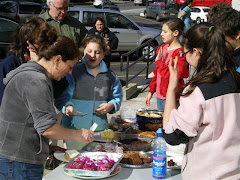
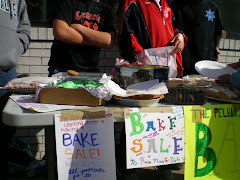
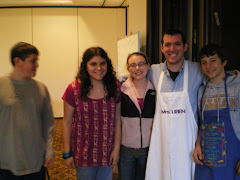
Our bake sale for Darfur aid raised $368 (in just an hour and a half!) Yishar Koach to the whole kitah zayin class, who helped with the organization, postering, baking and logistics. With everyone's help and participation, we were able to make a difference. May we all have such success raising tzedakah in the future. See below for the photos...





A Note about Web Safety
Remember - Do not give out personal information online like a phone number or address.
10 comments:
When I think about these sad and painful memories, it kind of helps me remember the joyous ones. For example, on the day that we remember the Holocaust, I still think about those brave, innocent people who died, but then I think about holidays or traditions in Judaism that I like. Also, these sad times of remembering help me remember other fun and happy times in general, to keep my mind off the sadness.
I agree with heather for once...
I think that remebering the fun we've had and the fun still yet to come is a good way to not exactly take our mind off the deaths but just let the deaths not overwhelm you and control you. If that happens they're aren't that many people that can pull you out of that little deppression spirals. I've had one and then I remebered the great fun I can have on my vacation which I was on and I felt better
I agree with Saul (who agrees with me but whatever.) It was the day of my grandfather's funeral and we were spending the week at his house in Arizona for the shivah and to fix his house and all that stuff. Being in that house I thought of good memories and times I had had back then and it didn't exactly take my mind off the horrible times, but it definitely eased the pain.
I think what you guys describe about shiva is really true. When people sit with you to share memories and reminisce, it can be very powerful in helping the process of mourning and healing.
I mentioned the Yizkor prayer in the original post. Traditionally, many people only recite Yizkor if one of their 7 immediate relatives has died (spouse, son/daughter, mother/father, brother/sister). If not, many people will leave the sacntuary until Yizkor is over (some people think it's superstitious to stay inside, because it might "cause" a death in their family if they are saying Yizkor for no reason).
Thank God I have not had any close relatives pass away, but I do like to stay in for Yizkor, because I say prayers to remember my grandfather and my great-grandparents, who died in recent years. You can also recite prayers for those who died in the Shoah, who don't have other people to recite the prayers for them.
Still, I understand why many people would not want to say it, because they may feel blessed that they have not lost someone close to them and prefer to let others have have that time for Yizkor.
Do you or your family have any particular customs for Yizkor? If not, what might you do the next time it is recited in shul (which will be on Shavuot in June?)
I do not think that I would leave the for the prayer. I probably would not say it though, partly not to jinx anyone in my family (I am pretty superstitious) and also, it's kind of like asking G-d to listen to a prayer that other people deserve to have heard more kind of if that makes sense.
I think that remembering the sad times in history does help you remember the happy ones, but it also lets people who remember not let those sad things happen again. For example, we all remember the Holocaust so we are working extra hard to stop the genocide in Darfur.
although it is a nice concept sarah unfortunatly i dont think that alot of people are helping. For instance if everyone was remebering the holocaust and helping in Darfur the genocide would be OVER. I know it sounds pessemistic but it's kinda true there are so many horrible things happening it's hard to get everyone to focus on one thing. for instance do we want to give money to Darfur or enviormental, earthquake or tsunami unfortunatly we tend to focus on things that are very specific to us.
i agree with saul, but even if EVERYONE helped Darfur and donated money and all that stuff, I don't think that the problems would be over. say if we all donated money and sent food and stuff, we might end the problem, but there would be still so many sick, poor people.
of course I am not happy at the thought of these events in Jewish histories, but maybe a little proud that all these people tried to stop the Jews and bring us down and still we stand today as a strong nation. Remembering the jews that sacrificed their lives for us is also very important though.
I think Helen is right. In so many times in history, not just the Holocaust, people have blamed the Jews and tried to destroy us. Though even many of our enemies aren't around anymore, we still are.
Oh, and Saul, just because a problem isn't resoved now, it doesn't mean that it won't be given time and it doesn't mean lots of people aren't working really hard to help.
And Heather's right; no matter how hard we work, there will always be problems in the world. That doesn't mean we can't do our part to make them better.
Post a Comment